18.06.2026 | 3 min read

The Compounding Effect of Daily Crop Management Decisions

Written by: Daniel Than, Customer Success Director at WayBeyond

Albert Einstein famously said; “Compound interest is the eighth wonder of the world. He who understands it, earns it… he who doesn’t, pays it.” While he was talking about money, the same principle applies just as much to farming.

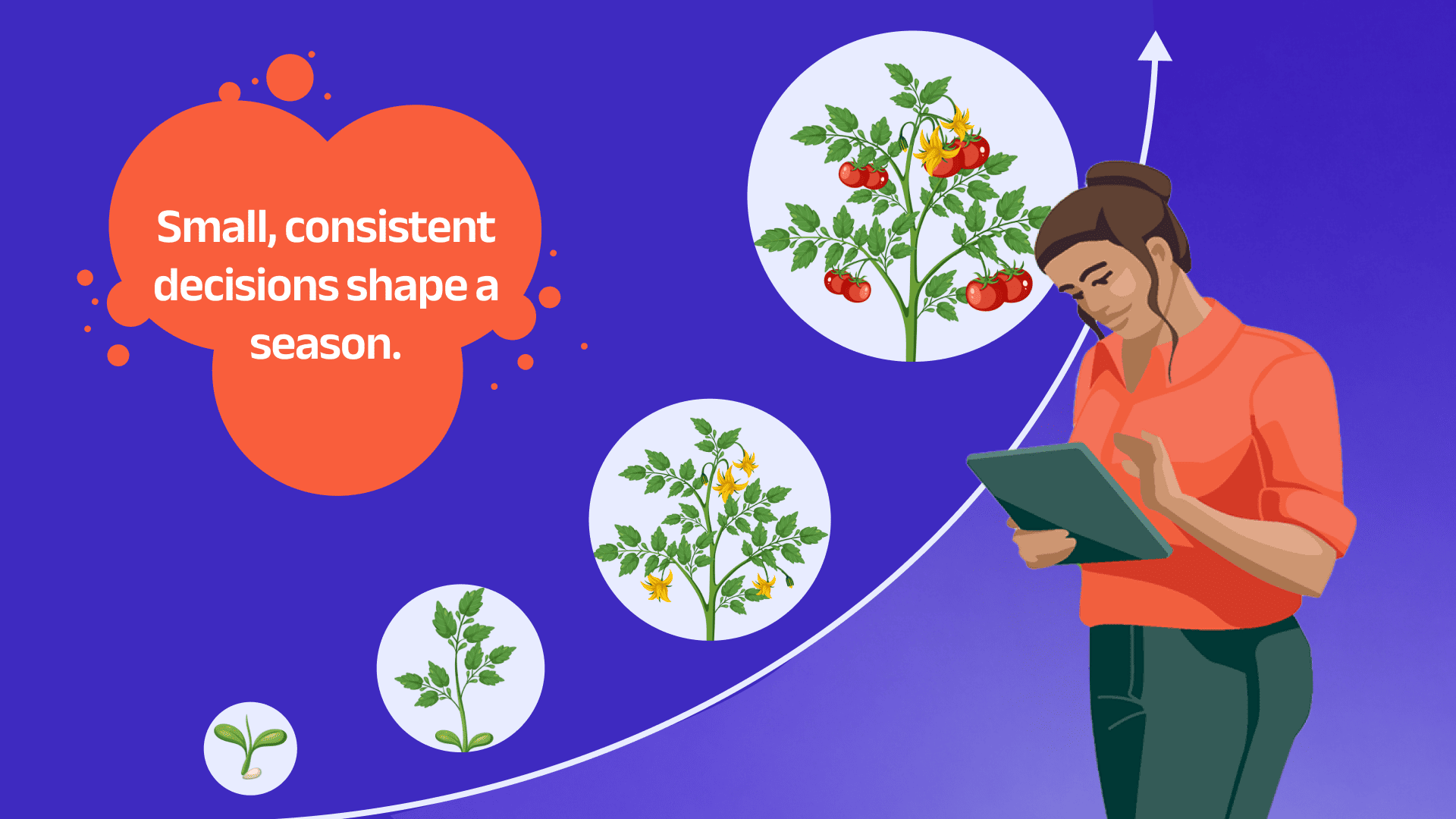
For growers, compounding shows up in the daily decisions that shape a season. A timely irrigation adjustment, preventive spray, or early response to shifting weather may not transform a crop overnight. But over time, all the small, consistent decisions a grower makes and actions they take compound to produce healthier, better-performing crops.

And this pattern works the same way in reverse. Poor, delayed actions and missed warning signs can also compound, turning minor risks into major disasters that are much harder to recover from.

Plant stress is a good example. A short spike in vapor pressure deficit (VPD) may not cause visible damage straight away, like the case of one unhealthy meal being unlikely to cause long-term health problems. But repeated exposure to stress conditions can gradually affect crop development, with the impact often showing up later in reduced production quality and yield.

As one experienced grower put it: “The moment you start having plant stress, you start to have a negative impact on your production. You’re going to pay for the damage in some way, and it’s going to affect you long term.”

Why proactive action matters in crop risk management

While not every crop threat can be prevented, many risks can be managed more effectively when they are identified early enough. This gives growers more time to take targeted action while the risk is still manageable.

Take plant diseases such as Botrytis or Powdery Mildew for example, which can spread quickly if not addressed promptly. Receiving early warnings for disease-favorable conditions enables growers to take proactive measures before damage sets in, such as applying a preventative fungicide, increasing ventilation, or adjusting harvest timing. 

That shifts the response from reactive firefighting to proactive risk mitigation, helping growers minimize crop loss and increase their control over outcomes. 

What helps growers make better daily crop management decisions? 

Strong crop outcomes are built on consistent daily decisions. But in busy day-to-day farm operations, that consistency can be hard to maintain. When growers are juggling multiple priorities at once, early warning signs can be easy to miss and the best response is not always clear.

That’s where a tool like FarmRoad Agronomy Intelligence can help. It turns farm data into AI-powered daily actions for protected cropping growers, providing a concise summary of crop risks based on hyper-local climate forecasts and recommended actions they can take immediately.

Growers with access to clear, actionable insights each day are better placed to make informed decisions. They’re able to spot emerging risks before they compound into bigger problems and respond while they still have control. Over time, those small actions add up to healthier crops and more predictable harvests.

So, how will you invest in your crops?

daniel-than
Article by Daniel Than

As Customer Success Director at WayBeyond, Daniel leads a small but mighty team that helps customers get the most value from digital agronomy tools like FarmRoad. Daniel is passionate about harnessing data and technology to help growers produce healthier crops and build more resilient food systems.