- INDUSTRY
- CROP MANAGEMENT
- ARTICLE
Five Ways to Make Your Fertilizer Go Further On the Farm
Surging fertilizer prices and supply shortages are forcing growers to rethink how they use...
20.04.2026 | 3 min
The enduring US-Iran conflict has severely disrupted global fertilizer supplies, making this agricultural input increasingly scarce and expensive. Growers everywhere are already feeling the impact – in the soil where they plant, the prices they pay for fertilizer, and the harvests they’re planning for right now.
To navigate this uncertainty, growers will need to rethink how they manage their fertilizer use.
Natural gas is the primary feedstock and energy source used to produce nitrogen-based fertilizers like urea and ammonia. When natural gas prices rise, so does the cost of fertilizer production.
At the same time, fertilizer products are growing scarce. With more than 80% of countries importing at least 75% of their fertilizers, disruptions to major shipping routes are tightening global supply. Nearly a third of the world's traded fertilizer is shipped through the Strait of Hormuz, and its effective closure since late February means that countries relying on imported fertilizer from the Persian Gulf are already facing delays and acute shortages.
All of this has led to a sharp increase in fertilizer prices. Middle East urea prices have reached as high as $700 USD per tonne, up from $400 to $490 before the war began. The cost of urea from Egypt, which serves as a global benchmark, has also risen by more than 60%.
And this isn’t just a short-term spike. With the fertilizer supply chain expected to remain volatile amid ongoing geopolitical tensions in the Middle East, growers will need to be more deliberate in how they manage their fertilizer use over the coming months.
For many producers, fertilizer can be the single largest input cost in crop production – and an essential one. Fertilizers supply nutrients like nitrogen, phosphorus, and potassium to nourish crops. It’s also vital for maintaining soil health, which can affect long-term potential yields.
Between rising fertilizer prices and growing supply risk, farmers are having to absorb higher input costs or conserve their use of fertilizer, all of which make crop production increasingly difficult to plan for. The result is lower productivity, reduced yields, and ultimately, higher food prices.
To cope with potential shortages and rising input costs, here are five ways to get the most out of your fertilizer:
For farmers applying nutrients through irrigation systems (fertigation), improving water management can directly reduce fertilizer inputs. One effective strategy for optimizing fertigation is evapotranspiration (ETo) forecasting. It provides a reliable estimate of how much water crops are likely to need based on real-time climate conditions, allowing growers to match water and fertilizer delivery to actual plant demand. By preventing over-irrigation, it reduces any nutrient loss through leaching.
Real results in the field: A Mexican tomato grower reported a 16% reduction in water use by integrating ETo forecasting and climate tools using FarmRoad into their irrigation planning, estimating potential fertilizer savings of up to $80,000 per hectare annually.
Timing fertilizer applications to suitable weather conditions is a simple way to prevent nutrient loss. Weather factors such as rainfall, air temperature, humidity, and wind speed all influence how effectively nutrients are retained in the soil and utilized by the crop.
Applying fertilizer right before heavy rain can lead to nutrients being washed away, while high temperatures and dry soil conditions can increase volatilization – a process in which nitrogen fertilizer is lost to the atmosphere before it’s taken up by the plant. For foliar applications, high winds and temperature inversions can cause spray drift, which not only wastes product but can also damage nearby sensitive crops.
The difference between an effective application and a poorly timed one often comes down to a narrow window of optimal conditions. Using a weather-based decision support tool like GrowPilot’s Spray Timing Guide helps identify that window, eliminating any guesswork.
To apply fertilizer efficiently, growers first need to understand their soil needs. A soil test can measure key parameters like nutrient levels, pH, salinity, and organic matter, helping determine what nutrients are available in the soil, what’s lacking, and how effectively they’re taken up by the crop. For example, suboptimal pH and high salinity soil conditions can limit nutrient uptake even when levels are sufficient.
Having soil information allows growers to replenish key nutrients to aid plant growth, avoid over-application, and adjust soil conditions where necessary to reduce fertilizer waste and improve overall efficiency.
Precision agriculture involves the use of data-driven tools that help farmers determine when fertilizer is needed and the exact amount required.
Variable-rate application is a key example, which allows growers to apply different rates of fertilizer in each part of the field. The distribution may depend on factors such as soil variability, moisture content, topography, and historical yield data. Rather than applying a uniform rate across the entire field, which can result in excess nutrients in some areas and deficiencies in others, growers can target specific zones according to their crops’ nutritional needs.
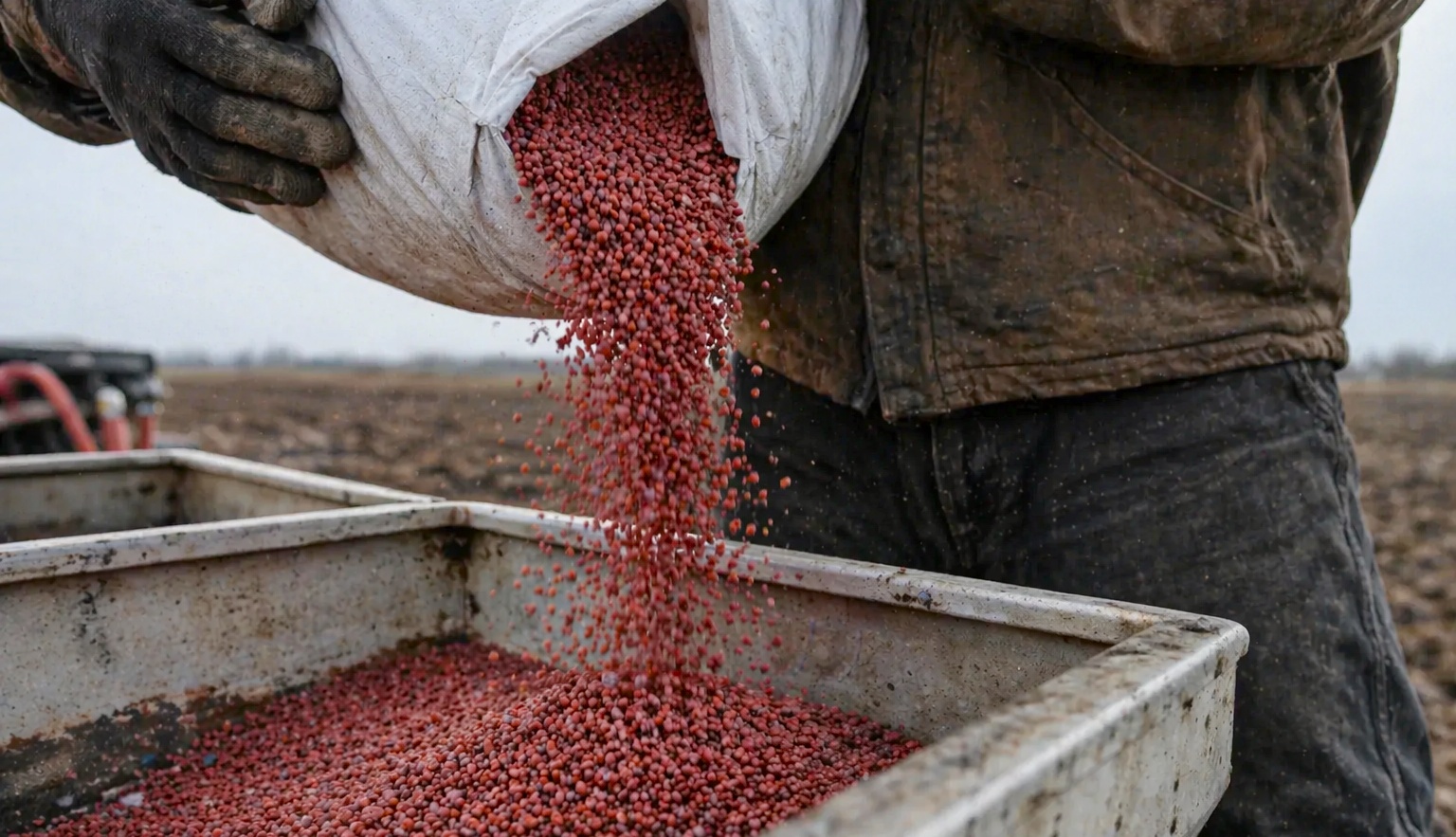
Controlled and slow-release fertilizers deliver nutrients more efficiently by releasing them gradually over time. This provides a consistent nutrient supply to the crop, supporting steady growth and reducing the risk of leaching or runoff.
Controlled-release fertilizers use coated prills or granules that release nutrients in response to soil temperature and moisture. Slow-release fertilizers, on the other hand, rely on microbial activity and natural chemical breakdown in the soil.
Despite the higher cost per bag compared with conventional fertilizers, they typically require fewer applications over the growing season, which can reduce labor time and effort and lower overall costs for growers in the long run.
In these increasingly uncertain times, growers who adopt smarter, more efficient fertilizer practices won’t just reduce waste, they’ll protect their harvests and margins, and build more resilient production systems for the seasons ahead.
Check out our article on managing other crop production risks like frost, heat stress, and plant diseases here.
Surging fertilizer prices and supply shortages are forcing growers to rethink how they use...
Darryn Keiller joins the Computomics Podcast to explore how digital agronomy is powering real-world...
From early signs to prevention, here’s how to manage powdery mildew fungal disease in crops.
Learn how to prevent frost damage in your crops with expert grower tips, from early risk monitoring...
Keep your crops safe from Botrytis (gray mold) disease using early detection and simple...
Discover how growers use predictive alerts to manage crop risks from frost, diseases, and extreme...
Spraying your crops in poor weather conditions can waste chemicals, increase costs, and harm...
Daniel Than, Customer Success Director at WayBeyond, explains why actionable climate insight—not...
Learn how to manage weather-related risks for your crops using an early warning system such as...
WayBeyond’s new GrowPilot app brings artificial intelligence into the hands of small to...
From cutting water use in drought-hit regions like Morocco to preventing thousands in losses from...
When faced with crop losses due to climate events and system failures, Eliven Tropical turned to...
A leading Moroccan berry grower cut water use by 16% using climate data and ETo-based irrigation....
ETo forecasting is a simple but powerful tool for optimizing irrigation every day, in every season....
From breeding climate-resilient berry varieties in Australia to testing precision irrigation...
See the strategy behind evapotranspiration-based irrigation planning that helped a greenhouse...
Costa Group is using WayBeyond’s FarmRoad platform to support its elite blueberry breeding program...
Soil systems around the world are under pressure. Pollution, climate extremes and unsustainable...
AgTech enters 2025 with strategic investments prioritizing long-term food security over quick...
Our newsletter explores the evolving world of agriculture through the lens of innovation, insight,...
Darryn shares how digital agronomy and AI-powered solutions help farmers optimize production,...
Learn how a people-first approach to change management empowers growers to successfully transition...
The grower's guide to using data for effective crop management. Get practical tips to achieve...
Darryn Keiller shares his thoughts on the urgent need to rethink farming, tackle regional...
The HM.CLAUSE Kenya seed production team faced several challenges in optimizing their yield...
With late blight causing crop loss and large costs, Agrícola Chaparral turned to digital agronomy...
Learn how six key weather data points can help you make smarter irrigation decisions, conserve...
Two weeks, three countries, and ten customer farm visits later, Daniel Than, WayBeyond’s Customer...
A smart approach to water management is key to helping growers tackle water scarcity and climate...
With over 470 ha of blueberry production, African Blue needed to unify farm data to improve crop...
What if tomato seeds were treated as commodities? This article explains how data and AI can help...
Uncover the vital role of drip and drain monitoring in optimizing drip irrigation farming.
Explore how protected cropping growers can use data insights to drive smart irrigation practices.
Learn how Khawla Derstaouieh embraces digital agronomy to optimize irrigation, track pests, and...
Heatflation is rising food prices caused by extreme heat from climate change. How can protected...
Heat stress is a significant concern for berry growers as it has both positive & negative effects...
Do growers focus too much on high accuracy yield forecasting and miss key contextual indicators?
Discover how Sanaa Elmarini enhances decision-making in blueberry crop management at African Blue...
Practical solutions for today’s challenges in the world of horticulture. From real-time data to...
Real-time alerts play a vital role in empowering growers to make better crop management decisions.
Darryn addresses the importance of food security, how the pandemic showed a real vulnerability in...
Real world examples of common issues faced by growers that can be solved with real-time data,...
In this crop steering guide, you'll learn how to adjust environmental factors for ideal plant...
Fruit Logistica 2024 in Berlin wrapped last week, bringing to a close its biggest edition yet with...
Discover strategies for maximizing crop yields by balancing generative/vegetative growth.
The protected crop growers guide to successfully managing your plants, team, practices and...
The future of farming may be indoors. We know that’s already happening for tomatoes and leafy...
Read our team's report on the 2023 Morocco Berry Conference, held in Agadir.
Learn how interpreting crop yield prediction with contextual data improves decision-making and...
WayBeyond's team share first impressions, general observations and key takeaways from Fruit...
SaaS adoption in horticulture: discover challenges and pitfalls for both growers and technology...
Frost devastates blueberry crops, leading to significant economic losses. By harnessing digital...
Digital agronomy insights helps tackle crop loss, production variations, and declining yield by...
Lee Kirsopp challenges the need for high accuracy yield prediction. Can other data provide better...
Insights and reflections from the WayBeyond team at GreenTech Americas 2023, held in Querétaro,...
3 production problems that can be solved by collecting data: cross loss from disease, poor crop...
WayBeyond's study unveils factors behind yield swings and proposes an alternative to improve yield...
Discover the true cost of a fungal disease outbreak in crops, how to respond and the financial...
With protected agriculture on the rise, Mexico is ripe for the next wave of tech innovation.
Get insights on Integrated Pest Management planning for effectively managing infestations.
Learn the challenges and potential of AI and machine learning in agriculture for sustainable crop...
Read the round up of Berlin Fruit Logistica 2023 from the WayBeyond team on the ground.
Learn how to manage plant stress and improve crop performance with Vapour Pressure Deficit.
Harnessing FarmRoad enabled to monitor the status of their crops and the farm as a whole and...
Why do growers use crop registration and how does it benefit crop management practices?
Our food systems face uncertainty in the wake of Climate Change. Cyclone Gabrielle highlighted the...
Growers require frequent and detailed climate data and crop status visibility to get the best from...
While the popularity of hand held moisture meters for plants shows no signs of abating, there are...
The agronomist at Season Farms noticed a drop in production and turned to WayBeyond's digital...
Plant pathology is the study of plant diseases and how they interact with plants. In this in-depth...
Lotte Bayly shares about her career journey, navigating gender bias, and her views on gender...
Champions of crop management.
Giving commercial growers the power to make better crop management decisions and optimize crop outcomes.
Solutions
Customers
©2026 WayBeyond. All Rights Reserved.