.svg)

.svg) SEARCH
SEARCH23.06.2026 | 3 min
How Crop Management Software Improves Crop Decisions


Key Takeaways
- Crop management software centralizes irrigation, climate, pest scouting, and plant health data to eliminate guesswork from daily decisions.
- Unified farm data helps growers respond to climate stress, disease risk, and irrigation failures before damage occurs.
- Real-time visibility across multiple farms lets you standardize practices and maintain quality at scale.
- Integrated pest and disease tracking reduces chemical input costs by targeting treatments only where needed.
Commercial growers and seed producers make hundreds of decisions every week about irrigation, climate, pest and disease responses, and plant health interventions. When your farm data lives in separate systems—or worse, on paper—each decision takes longer than it should. WayBeyond's FarmRoad brings irrigation, climate, pest and disease, and plant health data into one platform, giving you the clarity to act fast.
This article explains what crop management software does, how unified data helps you make better choices, and what features matter most when you're evaluating options for your operation.
What is crop management software?
Crop management software is a digital platform that collects, organizes, and analyzes data about your crops, growing environment, and farming activities. Instead of tracking irrigation schedules in one place, pest observations in another, and plant health notes somewhere else, you get one centralized system.
For protected cropping operations—greenhouses, polytunnels, and other controlled-environment agriculture—this matters even more. Environmental conditions shift rapidly inside structures, and missing a critical irrigation event or disease outbreak can cost an entire crop cycle.
Why unified data improves decision making
Siloed data forces you to mentally piece together information before every decision. You check your climate sensors, cross-reference your irrigation logs, and review your scouting notes—often in different formats or locations. This takes time you don't have during peak growing season.
When all your data sits in one place, patterns emerge faster. You can see that rising humidity in Greenhouse 4 coincides with the irrigation schedule you adjusted last week. That connection helps you act before botrytis (gray mold) takes hold.
WayBeyond's FarmRoad unifies climate, irrigation, pest and disease, and plant health data in a single platform. Growers can view their entire operation—across multiple farms and crops—without switching between systems.
How does crop management software handle irrigation?
Irrigation decisions affect water use, nutrient delivery, and plant stress. Get it wrong, and you risk root disease, reduced yields, or wasted resources. Crop management software helps by connecting real-time soil moisture readings, weather forecasts, and evapotranspiration (ET) calculations.
Advanced platforms such as FarmRoad provide ET data to forecast water demand based on temperature, humidity, wind, and solar radiation. This means you can plan irrigation schedules that match actual crop needs rather than following a fixed watering schedule.
How crop management software improves climate decisions
Climate conditions shape every major crop decision, from irrigation timing to disease prevention and plant stress management. In protected cropping, small shifts in temperature, humidity, light, and wapor pressure deficit (VPD) can quickly change crop performance, often before problems are visible.
Crop management software helps growers respond early enough by turning real-time microclimate data into actionable insights. Instead of reacting after stress appears, you can use alerts and historical trends to manage risks proactively, adjust irrigation or ventilation, and increase your control over outcomes.
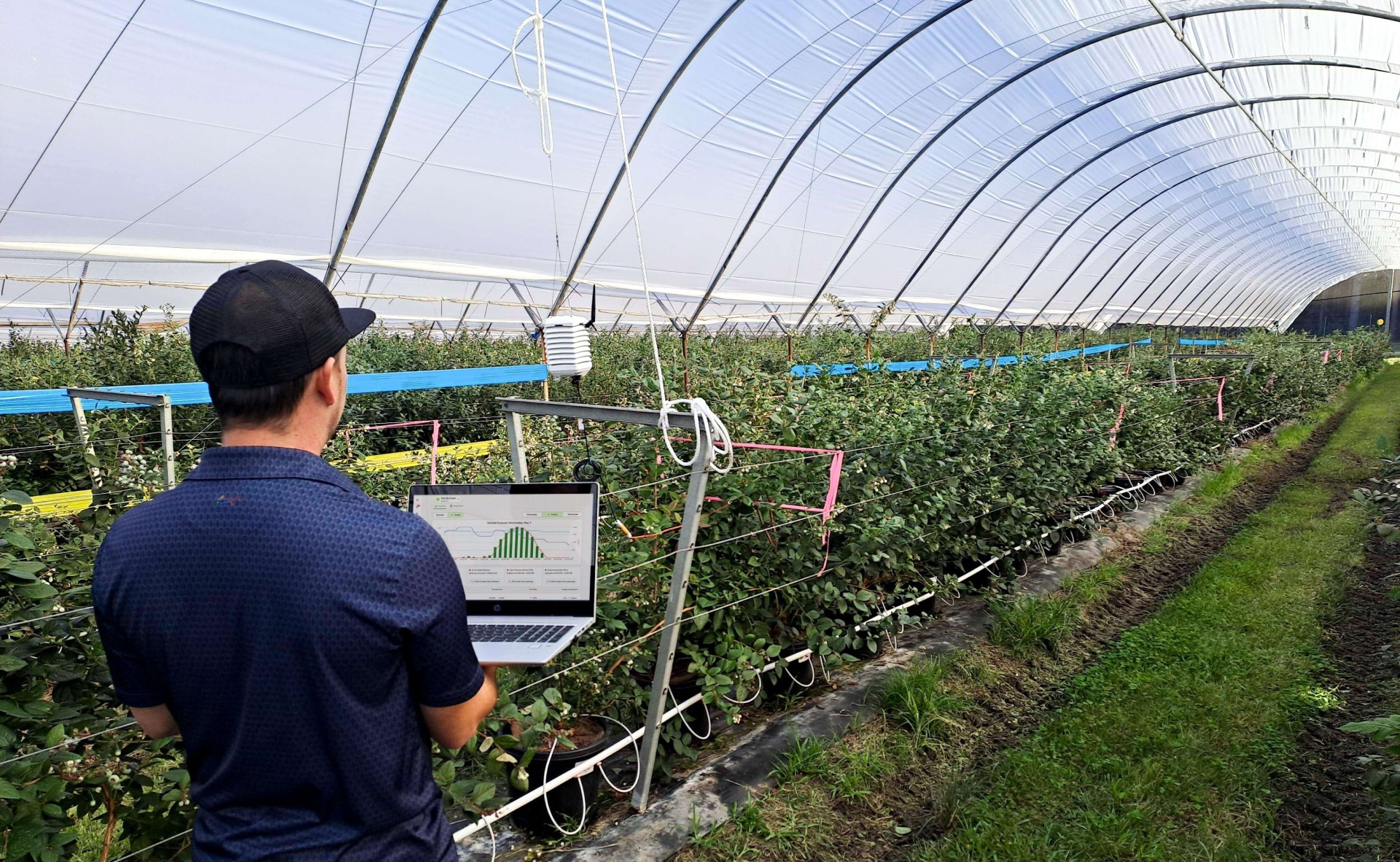
WayBeyond’s FarmRoad gives growers real-time visibility into climate conditions for each structure or growing area. It goes a step further by providing AI-driven forecasts inside protected growing environments, enabling growers to anticipate climate shifts and make real-time decisions on water and fertilizer use, crop health and pest and disease control.
Integrating pest and disease monitoring
Pest and disease management often operates separately from irrigation and climate monitoring. Scouts walk fields, record observations on paper or mobile devices, and then someone else interprets that data later. By the time you act, the problem may have spread.
Crop management software that integrates pest tracking with environmental data helps you spot conditions favorable to specific diseases. High humidity plus moderate temperatures? That's when botrytis and powdery mildew thrives. Software can flag these risk windows automatically.
WayBeyond's FarmRoad includes dedicated pest and disease management features. Growers receive alerts when environmental conditions increase risk, and they can track scouting results alongside climate data to see correlations over time. This helps reduce treatment costs by targeting interventions only where needed.
What plant health data should you track?
Plant health monitoring goes beyond visible symptoms. Temperature sensors on leaves and stems reveal stress before wilting occurs. Canopy sensors detect changes in chlorophyll content. These signals help you intervene early, before reduced photosynthesis affects yield.
When plant health data connects with your irrigation and climate records, you can trace problems to their source. Did leaf temperatures spike because the irrigation system failed, or because vents didn't open during a heat event? Unified data gives you the answer.
WayBeyond's FarmRoad leverages a wireless sensor network to monitor multiple environmental and plant health conditions simultaneously. This eliminates the need for separate sensor systems and reduces manual data collection.
How unified software supports multi-farm operations
Managing multiple farms amplifies the challenge of fragmented data. Each site may use different tools, record information differently, and report on different timelines. Getting a clear picture of your entire operation means compiling data from multiple sources manually.
Centralized crop management software gives you visibility across all locations from a single interface. You can compare performance between sites, identify which practices deliver better results, and standardize approaches based on data rather than assumptions.
For seed producers and breeding programs, this consistency matters even more. Genetic trials require precise environmental control and detailed record-keeping. One platform that captures all variables makes it easier to evaluate results accurately.
What features should growers look for?
When evaluating crop management software, focus on integration capabilities first. Can the platform connect with your existing sensors? Does it accept data from third-party weather services? A system that requires you to replace all your hardware creates unnecessary barriers.
Alerting and notification features matter for time-sensitive decisions. Look for platforms that send risk alerts via your preferred channels—email, SMS, or messaging apps—so you can respond quickly even when you're not at your desk.
Mobile access is essential for growers who spend most of their day in the field. WayBeyond's FarmRoad mobile app lets you view climate conditions, check alerts, record pest and disease observations as well as drip & drain irrigation data from any location. Growers can also receive a concise summary of the important crop risks for the day ahead, along with AI-powered recommendations on the next best actions to take.
Making faster, more accurate crop decisions
The goal of crop management software isn't to replace your expertise—it's to give you better information, faster. When you can see irrigation performance, pest pressure, and plant health in one place, you make decisions with confidence instead of uncertainty.
Growers using unified platforms report spending less time on data collection and more time on the decisions that actually affect outcomes. They catch irrigation failures before plants show stress. They target fungicide applications to specific blocks rather than treating entire farms.
This proactive approach reduces crop loss and increases your control over growing conditions. The result: better yields, lower input costs, and more predictable harvests.
FAQs about how crop management software improves crop decisions
What is crop management software used for? What is crop management software used for?
Crop management software collects and organizes data about irrigation, climate, pests, diseases, and plant health in one platform. This helps growers track growing conditions, identify risks early, and make faster decisions about interventions.
WayBeyond's FarmRoad unifies this data with sensor networks, A1-powered predictive models, and alerts, turning raw information into actionable insights for protected cropping operations.
How does unified data improve irrigation decisions? How does unified data improve irrigation decisions?
When irrigation data connects with weather forecasts and evapotranspiration calculations, you can schedule watering based on actual crop needs. You'll also spot irrigation failures immediately instead of discovering damage days later.
WayBeyond's Irrigation Forecast Dashboard gives accurate reference evapotranspiration (ETo) forecasts over 7 days based on real-time climate data. See how it's helped a grower reduce water use by up to 16 percent.
Can crop management software help with pest control? Can crop management software help with pest control?
Yes. By connecting pest scouting data with environmental conditions, software can flag when disease risk increases. You can track outbreaks over time, correlate them with specific conditions, and target treatments more precisely.
WayBeyond's FarmRoad includes dedicated features for managing plant diseases and pests alongside climate and irrigation data.
What types of sensors work with crop management platforms? What types of sensors work with crop management platforms?
Most platforms accept data from soil moisture sensors, temperature and humidity monitors, light sensors, and weather stations. Advanced systems also integrate plant sensors that measure leaf temperature and stem growth.
WayBeyond's wireless sensor network monitors multiple environmental conditions simultaneously without requiring separate sensor systems for each variable.
Is crop management software useful for multi-farm operations? Is crop management software useful for multi-farm operations?
Absolutely. Centralized software gives you visibility across all locations from one dashboard. You can compare performance between sites, standardize practices, and identify which approaches deliver better results.
WayBeyond's FarmRoad supports enterprise growers and seed producers managing multiple farms, crops, and, and growing zones from a single platform.

Featured Resources




.svg)

.svg)