.svg)

.svg) SEARCH
SEARCH03.12.2025 | 3 min
What Is the Best Weather for Crop Spraying?


.jpeg?width=2000&height=1111&name=farmer%20spraying%20crops%20(1).jpeg "farmer spraying crops in open field in good weather conditions")
Crop spraying is one of the most important tasks for any farmer, which involves applying crop protection products to prevent and control pests and diseases, and fertilizers to supplement the nutrients plants need to grow. While there are a number of factors that determine the right time to apply these agrochemicals, the suitability of the weather is a critical one to consider. Key weather factors such as wind, rainfall, air temperature and relative humidity all play a significant role.
In this article, we’ll explore why each of these factors matter for agricultural spraying, and how growers can time their applications safely and effectively to get the best outcome for their crops.
Why is it important for growers to know the best weather for crop spraying?
One of the major recurring expenses for farmers is the use of chemical pesticides and fertilizers, so understanding how weather affects crop spraying is essential for optimizing these inputs.
What are the hidden costs of poor spray timing for growers?
In the U.S. alone, farmers spend over $20 billion a year on chemical inputs to protect their crops from pests and disease. Yet a staggering portion of pesticides miss their mark due to poor spray timing. When weather conditions are suboptimal, sprayed products can drift off target, evaporate before being absorbed, or run off plant surfaces onto the soil, where they end up in streams and waterways, often causing serious pollution.
When pesticide applications are timed effectively, it cuts chemical waste, lowers costs, reduces environmental impact and, more importantly, enables better pest and disease management to maintain crop health and yield.
What are the different weather conditions which affect crop spraying?
Weather conditions such as wind, rainfall, air temperature, and relative humidity can directly influence the outcome of spray applications.
Let’s break down these weather parameters for safe and effective crop spraying:
How does wind affect crop spraying?
Wind is the most important factor to consider when it comes to crop spraying. High wind speeds greatly increase the risk of spray drift, which is the movement of spray droplets away from the target plant and onto neighbouring fields or sensitive areas. This can lead to wasted chemicals, as well as potential damage to non-target crops and the environment,
However, strong winds aren’t the only concern. Wind speeds below 5 km/h (3 mph), or “dead calm”, as growers call it, often coincide with adverse spraying conditions such as temperature inversions, where the potential for drift is high.
Generally, a gentle, steady breeze of around 5-15 km/h (3-10mph) provides the ideal wind conditions for spraying, allowing droplets to deposit evenly on the crop while reducing the risk of off-target movement.
| Suitability for spraying | Wind speed (km/h / mph) |
|
Good/ideal |
Light to gentle breeze ~ 5-15 km/h (3-10 mph) |
|
Average |
3-5 km/h (2-3 mph) or 15-20 km/h (9-12 mph) |
|
Poor/unsafe |
Calm ~ below 3 km/h (2 mph) or High wind ~ above 20 km/h (12 mph) |
Wind speeds and suitability for crop spraying
The direction of the wind is just as important as its speed. For safe spraying, the wind should move toward the intended target area while staying clear of susceptible crops..
💡Grower Tip: Keep an eye on the expected wind speed and direction, and when these changes are likely to occur throughout the day. Aim to avoid spraying during strong winds and dead calm conditions to minimize the risk of pesticide drift.
How does rainfall affect the timing for crop spraying?
Rainfall is another critical factor affecting spray timing and can influence the effectiveness of chemicals after they’re applied. Most pesticides, along with some fertilizers, need a specific amount of time to dry and be absorbed by the plant, known as the rainfast period, which can be found on the product label.
If it rains before this period is complete, the applied product can be washed off the plant before it’s fully absorbed. Wet leaf surfaces after rainfall can also make it harder for spray droplets to stick, limiting the treatment’s effectiveness.
💡Grower Tip: Monitor short-term forecasts for the likelihood of rain. Delay spraying if light rain (under 5mm) is expected within the rainfast period, and allow at least 24 hours after heavy rainfall for soil conditions to stabilize and leaves to dry completely before beginning treatment.
How do air temperature and relative humidity affect crop spraying?
Air temperature and relative humidity work together to determine how quickly spray droplets evaporate after application, affecting both coverage and uptake on the plants.
Hot and dry conditions increase the likelihood of spray drift because droplets evaporate faster and shrink into finer particles that are easily carried off-target. This rapid evaporation can also concentrate the active ingredients in crop pest control products, which may lead to phytotoxicity and damage to the plant - one reason why agrochemicals specify upper temperature limits on their labels.
Cooler, more humid air, on the other hand, is more favorable for crop spraying as it slows the drying of spray droplets on the leaf surface, giving the chemical more time to be absorbed by the plant.
What is Delta-T and how can it be used in crop spraying?
Growers can use a measure like Delta-T to assess the rate of spray evaporation. High Delta-T values indicate rapid droplet evaporation and an increased risk of drift, while very low values signal slower drying and a greater chance of the spray being washed off. As a general rule of thumb, a Delta-T between 2 and 8 is considered ideal for spraying.
How to measure Delta-T
Delta-T is calculated using the formula:
ΔT = Dry Bulb Temperature – Wet Bulb Temperature
This means you need two temperature readings: the dry bulb temperature (normal air temperature) and the wet bulb temperature (air temperature influenced by humidity). The difference between these values gives you the Delta-T.
How growers can get Delta-T levels
To get Delta=T levels for spraying, growers can use a weather tool such as a handheld meter or an on-farm weather station, which automatically calculates Delta-T based on air temperature and relative humidity readings.
💡Grower Tip: Don’t rely on one weather measure alone before spraying. Pay attention to air temperature and relative humidity levels, using a value like Delta-T to assess conditions.
How do temperature inversions affect crop spraying?
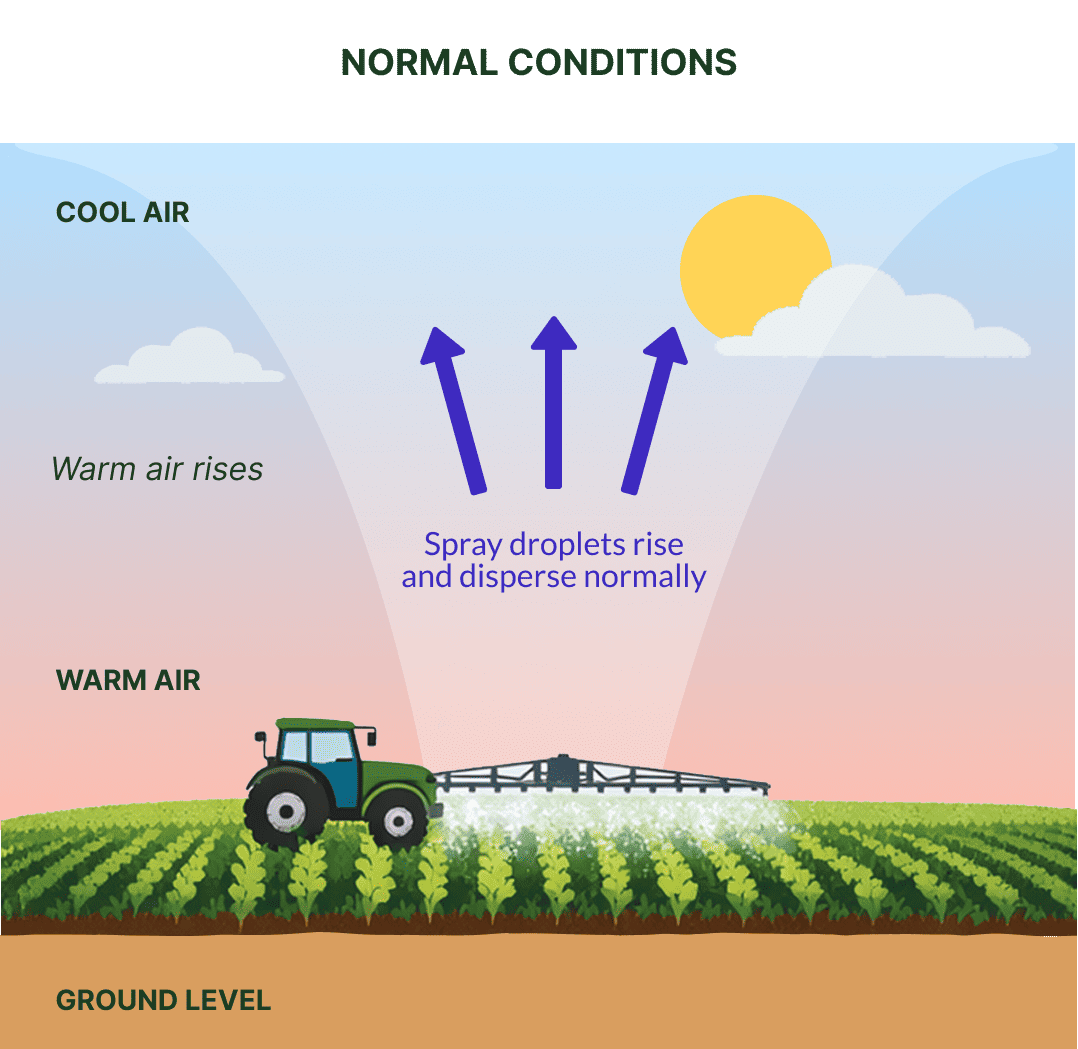
Temperature inversions can create hazardous conditions for spray drift. Under normal conditions, the temperature of the air gets colder at higher altitudes. But during an inversion, a layer of warmer air settles above the cooler air near the surface, limiting vertical air movement and preventing spray droplets from dispersing as they normally would. When this happens, droplets remain suspended in the air and can travel long distances from the target area once the inversion breaks.
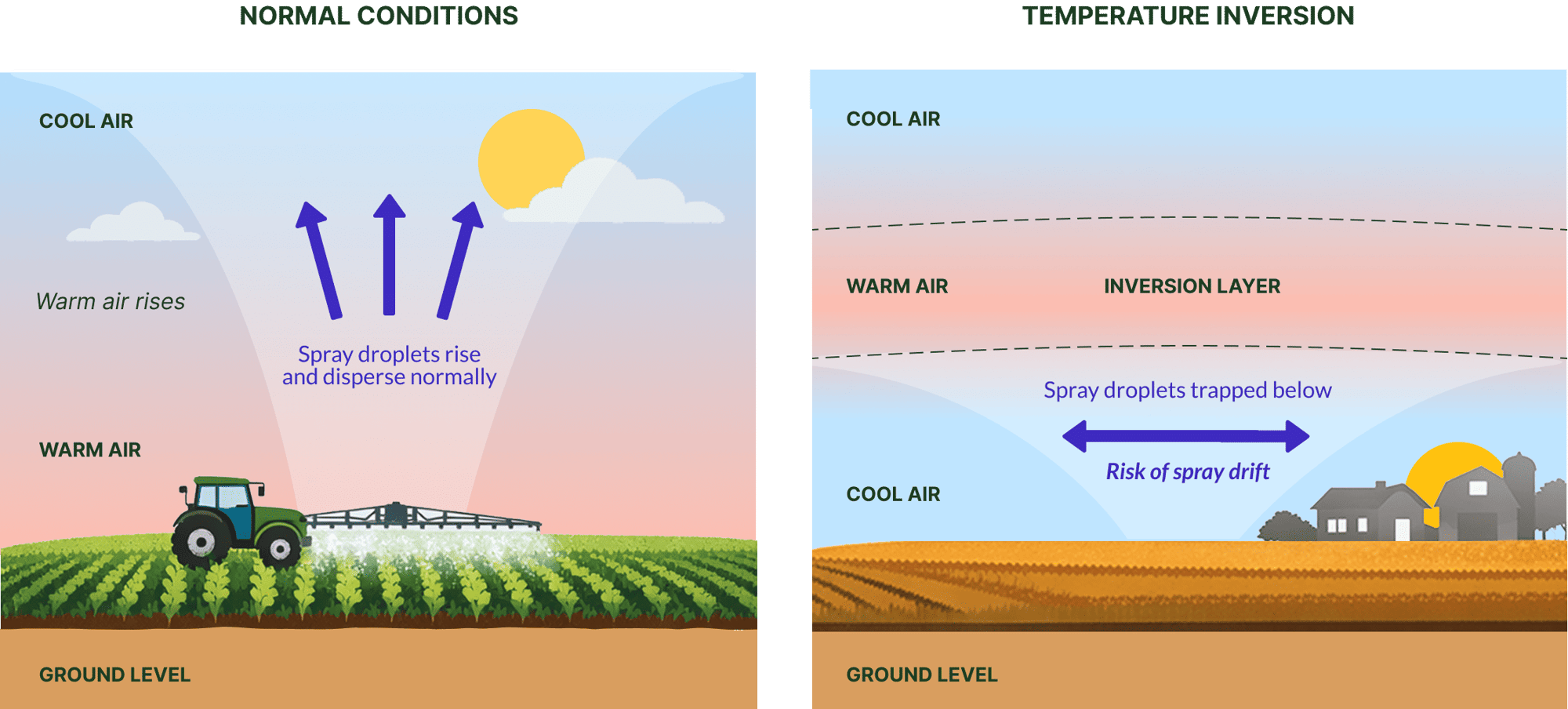
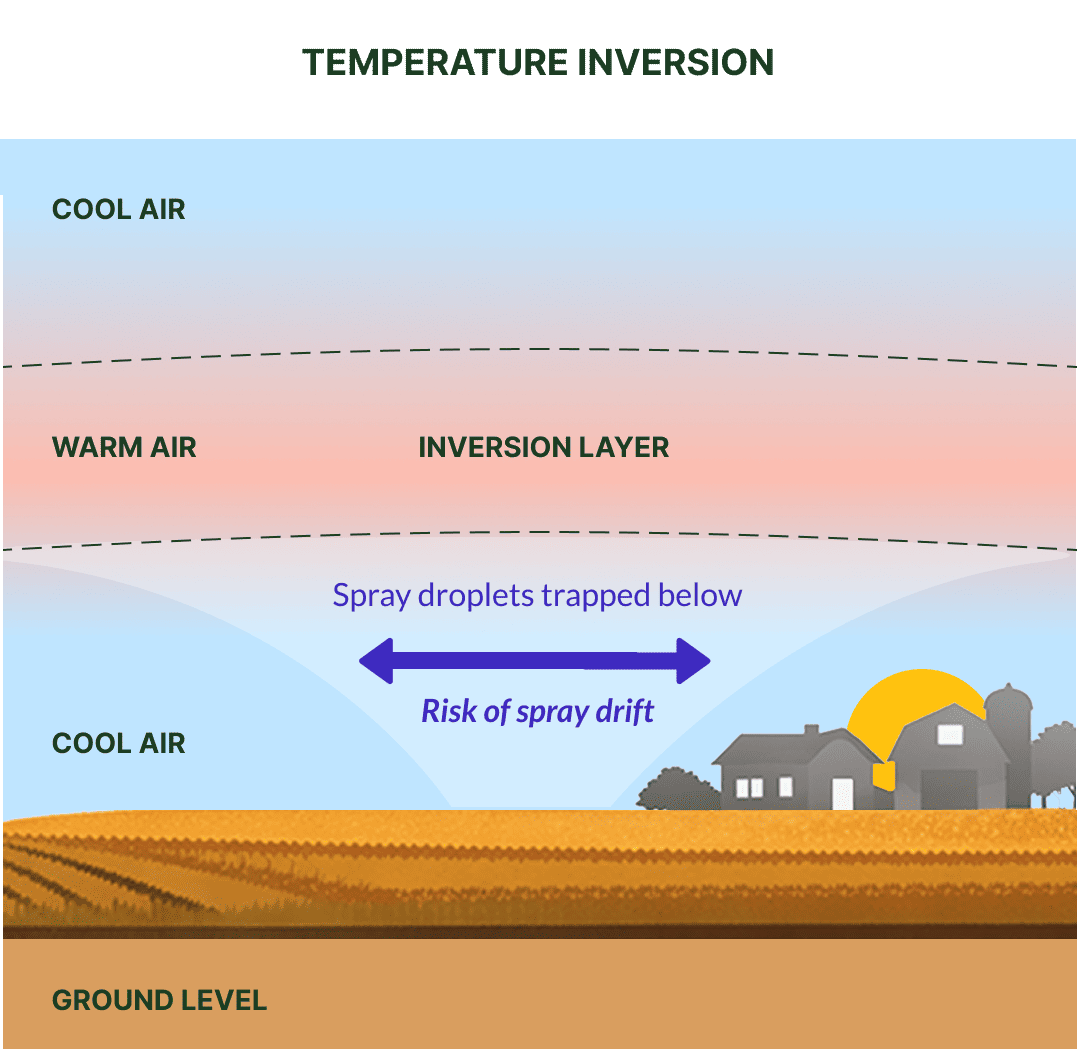
While temperature inversions may develop at any time of the day, they are most likely to form during clear, calm evenings, and may persist into early morning.
💡Grower Tip: Fog, smoke or dust lingering near the ground are useful indicators of a temperature inversion. During an inversion, it’s best to delay spraying until the surface air begins to warm or light winds return (above 5 km/h or 3 mph).
What are some tools to help prepare for crop spraying?
Accurate, real-time weather monitoring helps growers identify suitable windows for spraying, eliminating guesswork.
Tools like WayBeyond’s GrowPilot app give growers localized forecasts and current field insights, allowing them to act on the latest information and anticipate changes in weather conditions.
While navigating the unpredictable nature of the weather is a challenge, having reliable forecast data to work with is the crucial first step toward smarter, more effective spraying.
Missed our blog on managing weather risks for your crops? Catch up here.
Featured Resources




.svg)

.svg)