.svg)

.svg) SEARCH
SEARCH24.03.2026 | 5 min
How to Prevent Frost Damage in Plants: What Growers Need to Know


Key Takeaways
- Frost damage happens when ice forms around or inside plant tissues, dehydrating cells or rupturing cell walls.
- Crops are most vulnerable to frost during bud break, flowering, and early fruit development.
- Frost risk increases on clear, calm nights with rapid overnight heat loss, especially when plant surfaces cool below freezing.
- Growers reduce risk by combining early monitoring with active protection methods such as irrigation, covers, wind machines, or heaters.
- Real-time, location-specific weather alerts are more useful than historical frost dates alone when timing protection decisions.
Just as spring or autumn/fall begins to settle in, frost can strike without warning — catching growers off guard overnight.
Even a single cold snap at the wrong time can damage buds, flowers, or developing fruit, drastically reducing both crop yield and quality.
To prevent frost damage in plants, growers need to understand what conditions create frost, which crops are most vulnerable, and which protection methods work best for the type of frost event they are facing.
Get Frost Risk Alerts On Your Phone - Download the GrowPilot App
What is Frost and How Does it Form on Plants?
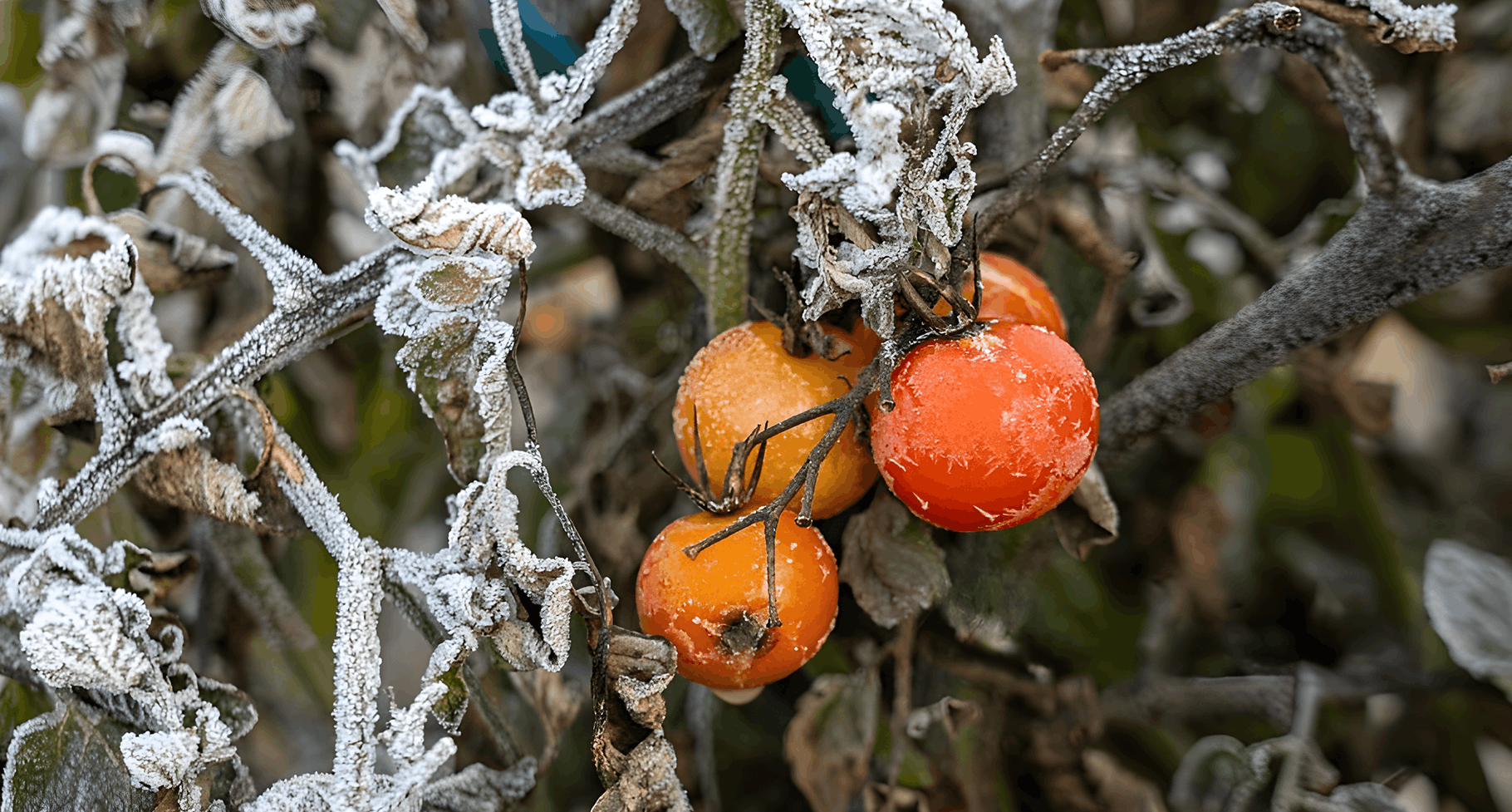
Frost forms where water vapor in the air turns directly into ice crystals on cold surfaces. It typically appears on exposed outdoor surfaces such as plants, soil, cars, and windows.
Frost occurs when surface temperatures drop to 0°C (32°F) or below, and fall past the dew point of the surrounding air — the temperature at which air becomes saturated and can no longer hold all its moisture.
It’s important to note that frost can form even when air temperatures are slightly above 0°C. This happens because plant surfaces can lose heat faster than the surrounding air through a process called radiational cooling, allowing the surface temperature of the plant to drop below freezing while the air temperature stays above it.
Most frost events occur overnight under clear, calm conditions. During the day, soil and plants absorb heat from the sun and slowly release that heat after sunset. On clear, still nights, that heat escapes quickly into the atmosphere, causing plant surfaces to cool rapidly.
What Types of Frost Should Growers Know About?
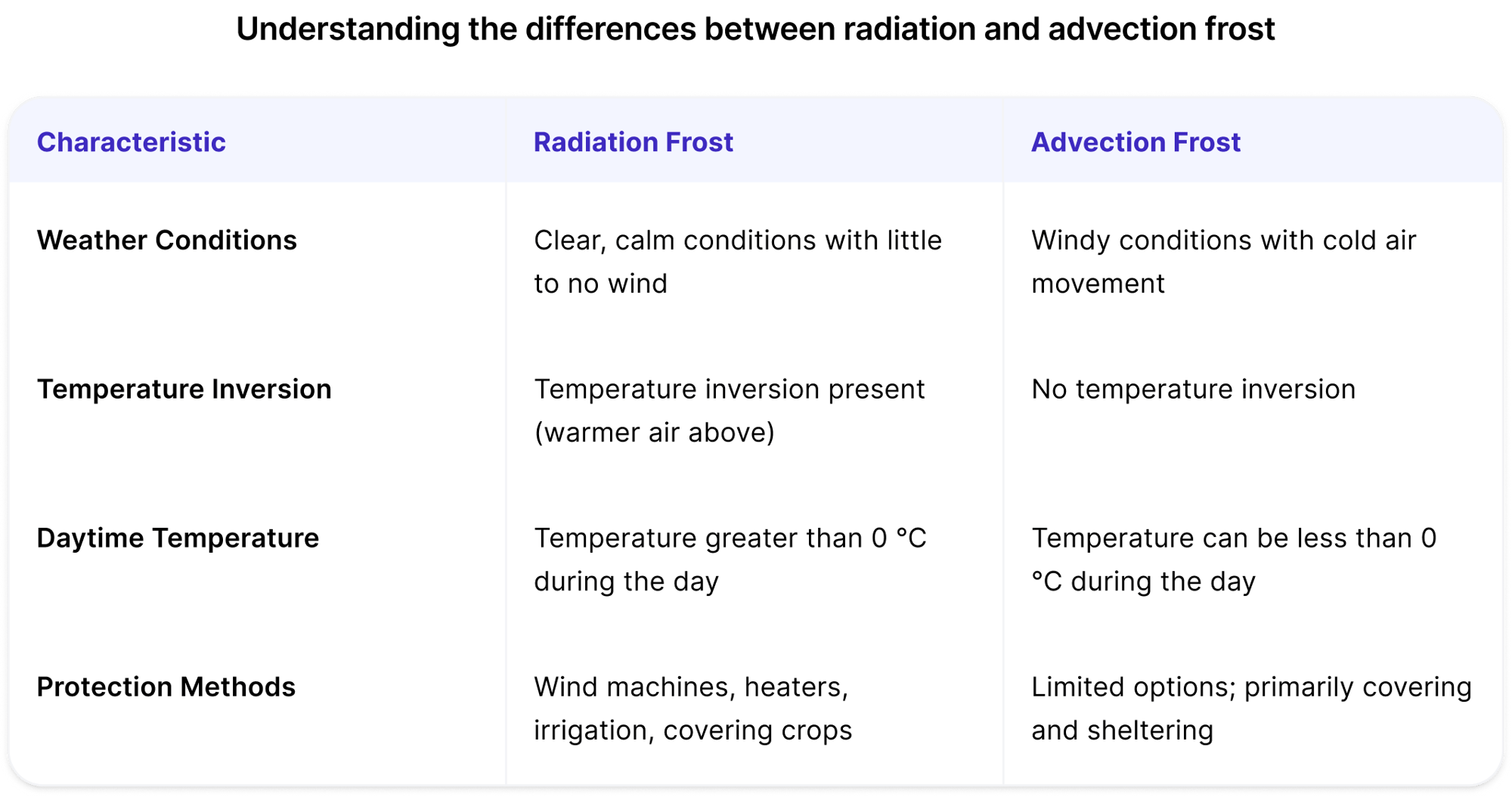
Growers generally encounter two main types of frost: radiation frost and advection frost. Let’s take a look at both.
Radiation Frost
Radiation frost is the most common type. It forms on clear, calm nights when heat stored in the soil and crop is lost to the atmosphere. With no cloud cover to trap that heat and little to no wind to mix the air, a temperature inversion forms. This means the air near the ground becomes colder than the air above it, causing surface temperatures to drop below freezing.
This inversion layer is used in several frost protection methods, such as wind machines or helicopters, which work by recirculating warmer air from above back down to the crop level.
Advection Frost
Advection frosts, also known as wind frosts, is a collection of small ice spikes that occurs when a large mass of cold air moves into a region as part of a broader weather system. These events are accompanied by moderate to strong winds, no temperature inversion, and a widespread drop in air temperature that can occur at any time of the day.
Because there is no inversion layer to work with, many standard frost control methods become far less effective, making advection frosts particularly difficult to manage.
How Does Frost Damage Plants?
Frost damage in plants occurs when ice forms within or around the plant tissues and injures the cells. In freezing conditions, water between plant cells freezes first. This draws moisture out of the cells, causing dehydration and leakage of the cellular contents. If temperatures continue to drop, ice can form inside the cells themselves. These ice crystals can expand and rupture delicate cell walls and membranes, causing irreversible damage and often killing the affected plant tissue.
Visible symptoms of frost injury often appear several hours or days after the event. Leaves may wilt or develop a scorched appearance, turning dark brown or black as the damaged tissue dies. Flowers or developing fruit may appear unaffected at first, but later fail to set fruit or produce deformed crops.
When Are Crops Most Vulnerable to Frost Damage?
The risk of frost damage depends heavily on the growth stage of the crop. Dormant plants can often tolerate extremely low temperatures without injury. However, once plants begin active growth in spring, their tolerance to cold temperatures decreases rapidly. Spring frosts are therefore the most damaging events for many commercial crops.
Bud break is one of the most vulnerable stages. As buds swell and open, the tissues inside become highly sensitive to freezing conditions. Even a brief temperature drop below freezing can destroy developing flowers or shoots, particularly in crops like blueberries. Flowering and fruit development are also critical stages. Frost during this time can prevent pollination or damage developing fruit structures, ultimately leading to reduced yields later in the season.
Can Frost Be Good for Plants?
Frost can actually benefit some plants. Deciduous fruit trees, for example, require a period of winter chilling during dormancy to support healthy bud break in the spring. Cold snaps also disrupt pest and disease cycles, and convert starch into sugar in root crops like parsnips, carrots, and beetroot, as well as leaf and stem crops such as leeks and kale, improving their flavor.
How Growers Can Protect their Crops from Frost
Growers can use a combination of preventive strategies and active protection methods to protect their plants from frost.
Preventive measures help reduce the risk of frost, while active methods are implemented just before or during a freeze event to counter temperature drops and minimize crop losses.
Active Methods of Crop Frost Protection
Wind machines
Wind machines, or frost fans, mix warmer air from above the crop with colder air near the ground. They are effective during radiation frost events when an inversion layer is present. By keeping the air moving, wind machines prevent cold air pockets forming around the crop, reducing the risk of frost forming.
Overhead irrigation
Growers can use overhead sprinklers on frosty nights to cover their plants with water. As the water freezes, it releases latent heat that helps plant tissues stay near 0°C (32°F), even if air temperatures fall lower. For this method to work, sprinklers must run continuously while temperatures remain below freezing — stopping too early can allow ice to melt and draw heat away from the plants, causing frost damage.
Heaters
Frost protection heaters keep air and surface temperatures above freezing and can run on propane, natural gas, or electricity. They are typically placed around the farm to provide even coverage, and are often used alongside wind machines to help distribute warmth across a larger area.
Helicopters
Helicopters are sometimes used to fight frost In vineyards and orchards. By flying at low altitudes, they push warmer air from the inversion layer down toward the crops. While they cover large areas effectively, helicopters are usually reserved for emergency use because of high operating costs.
Preventive Measures to Reduce Frost Risk
Growers can take several proactive measures to protect sensitive crops ahead of a cold front. Here’s how:
1. Monitor weather conditions.
Keep an eye on local weather forecasts. but also pay attention to environmental cues — temperatures are more likely to drop on clear nights that lack insulating cloud cover.
2. Cover crops
Frost cloths or row covers are an affordable way to protect crops during frosting weather. Apply them in the evening when temperatures are expected to fall below freezing. They reduce direct frost exposure and help retain soil heat, creating a slightly warmer microclimate around the plants.
.jpg?width=500&height=550&name=Fruit%20tree%20wrapped%20in%20frost%20blanket%20(1).jpg "A fruit tree wrapped in frost cloth")
A fruit tree wrapped in frost cloth
3. Irrigate strategically
While it may seem counterintuitive, watering the soil in the late afternoon or early evening before a frost can help. Wet soil holds and radiates heat more effectively than dry soil, which can keep the air around the plants a few degrees warmer.
4. Mulch the soil
Applying organic mulch, such as straw or compost, helps insulate the soil and retain heat overnight. Mulch also reduces temperate fluctuations, protecting plant roots from sudden cold snaps.
5. Prune carefully
Hold off on pruning tender crops too close to expected frost periods, as this can expose new shoots and buds which are particularly vulnerable to the cold.
6. Avoid frost pockets
Cold air is denser than warm air and naturally flows downhill, accumulating in low-lying spots known as frost pockets. Avoid planting frost-sensitive crops in these areas to reduce exposure.
7. Use protected structures
Greenhouses, high tunnels, and hoop houses shield crops from frost and other adverse weather, proving a physical barrier against cold conditions.
Why Frost Timing Has Become Harder to Predict
For decades, growers and farmers have relied on publications that estimate first and last frost dates based on long-term historical averages. While these tools remain useful as a general guide, they are becoming less reliable as seasonal patterns shift and climate variability increases.
Warmer winters and higher spring temperatures are causing many crops to bloom earlier than they did in the past. Meanwhile, late-season frosts and sudden cold snaps can still occur, and when they happen after early plant development, the damage can be significant.
That’s where precision weather forecasting tools offer a clear advantage over frost date estimates. Instead of relying on historical averages, growers can monitor real-time, location-specific conditions and short-term forecasts, helping them act early to protect vulnerable crops before a frost event hits.
What Tools Can Growers Use to Anticipate Frost Risk?
Using a weather forecasting tool like WayBeyond’s GrowPilot app makes it easy to anticipate frost risk. It provides localized forecasts for conditions that directly influence the likelihood of frost, including air temperature, relative humidity, and wind speed. GrowPilot also provides predictive frost alerts days in advance, giving growers the time they need to act — whether that’s activating frost protection systems, adjusting irrigation, or deploying crop covers before temperatures drop.


Frequently Asked Questions (FAQ) About Frost and Crop Protection
What weather conditions increase the risk of frost? What weather conditions increase the risk of frost?
When should growers protect their crops from frost? When should growers protect their crops from frost?
Apply protective measures before temperatures reach the crop’s critical threshold, ideally when frost is forecast. Early intervention is key to reducing crop damage.
Which crops are the most susceptible to frost damage? Which crops are the most susceptible to frost damage?
Can frost-damaged plants recover? Can frost-damaged plants recover?
At what temperature does frost damage plants? At what temperature does frost damage plants?
How to spot frost damage in crops? How to spot frost damage in crops?

Featured Resources




.svg)

.svg)